Monday, August 22, 2011

The First World War and Dada


The First World War, British and German Soldiers, Bernafay Woods, 1916


Otto Dix, Card Playing War Cripples, New Objectivity


George Grosz, Funeral of Oskar Panizza, New Objectivity


Käthe Kollwitz, "Outbreak," from The Peasant War, etching, New Objectivity


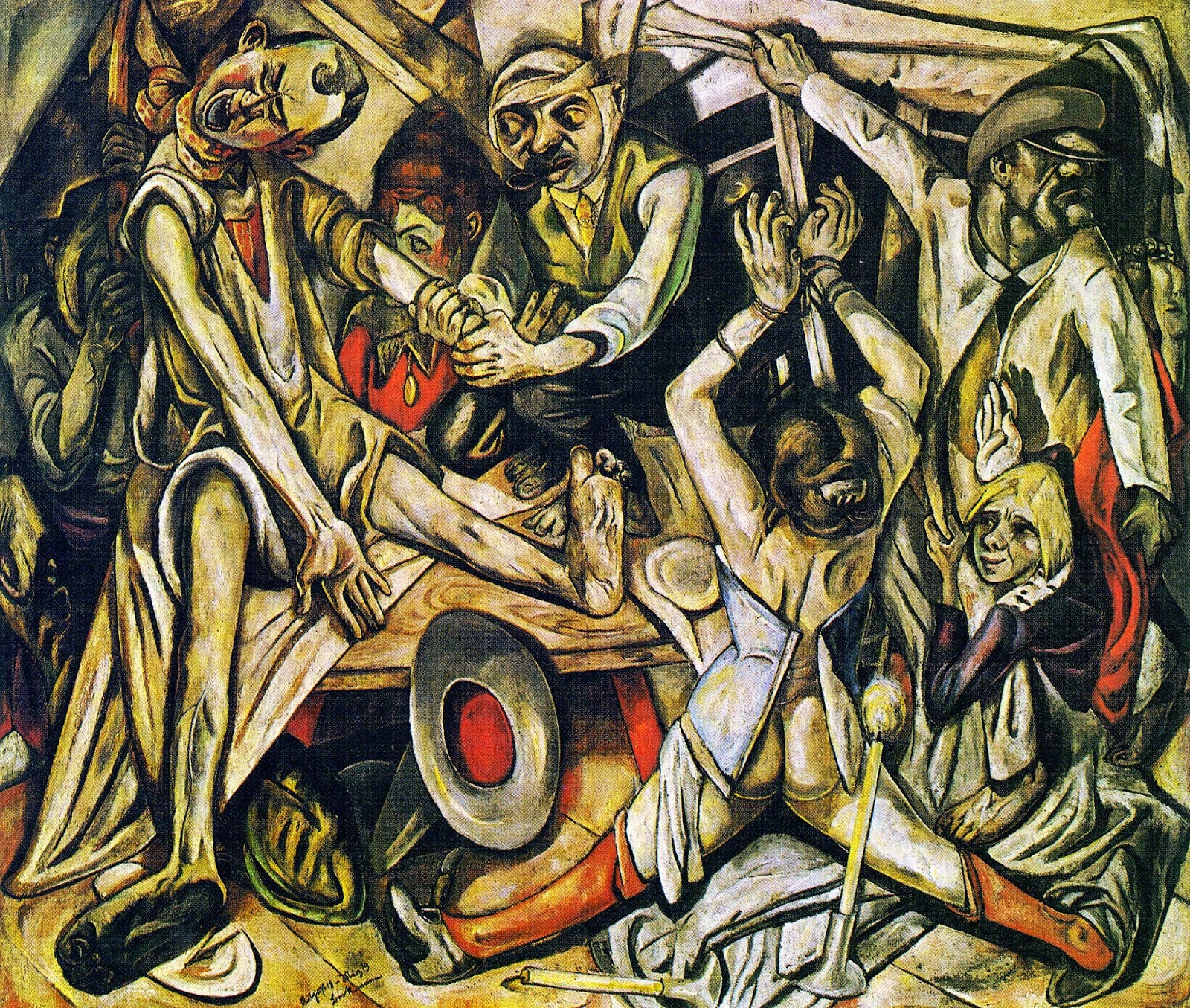
Max Beckmann, The Night, New Objectivity


Max Beckmann, The Departure, New Objectivity


Hugo Ball in costume about to recite one of his poems at the Cabaret Voltaire in Zurich, Dada


Sophie Täuber, puppets, Zurich Dada


Hans Arp, Random Collage, Zurich Dada


Raoul Hausmann, The Spirit of the Age, collage construction, Berlin Dada


Hannah Höch, The Flirt, photocollage, Berlin Dada


John Heartfield, "And Yet, It Moves," photomontage, Berlin Dada


Kurt Schwitters, Construction for Noble Ladies, painting and collage


Kurt Schwitters, Merzbau, (destroyed)


Marcel Duchamp, Nude Descending a Staircase


Marcel Duchamp, Fountain


Marcel Duchamp, The Large Glass (The Bride Stripped Bare By Her Bachelors, Even)


THE FIRST WORLD WAR

New Objectivity
--Otto Dix
--George Grosz
--Käthe Kollwitz
--Max Beckmann

DADA

Zurich
--Cabaret Voltaire
--Automatic Drawing
Berlin
--photo-collage
--photo-montage
Marcel Duchamp
--readymade
--anti-art


The First World War:  The Menin Gate, Ypres Belgium

The Menin Gate is a war memorial whose walls are covered with the names of British, Canadian, Australian, and New Zealander soldiers who perished in fighting around Ypres, and whose bodies were never recovered.
Every evening buglers from the Ypres fire department play The Last Post, and have done so since 1918, except for the years of German occupation during World War II.
The First World War is a largely forgotten conflict for most Americans, but the memory of that war still touches open wounds for a lot of Europeans, even a century later, as you can see in the large attendance at this ceremony and every ceremony at the Menin Gate.


Dada on Film


Ghosts Before Breakfast,

A  film by Hans Richter, 1928.  In this 6 minute film, Richter appears in the movie along with two composers, Darius Milhaud, and Paul Hindemith who wrote the music for the now destroyed soundtrack.  Ordinary objects seem to come to life and have a will of their own in this plotless movie that uses stop action animation in a very original way.


Anemic Cinema


Anemic Cinema, 1926. Duchamp made a series of spirals and filmed them while turning on a phonograph turntable. He also added a series of spiraling phrases that are intended to be puns.


Here are those phrases untranslated:

"Bains de gros thé pour grains de beauté sans trop de bengué." (BenGay was invented in France by Dr. Jules Bengué)
"L'enfant qui tète est un souffleur de chair chaude et n'aime pas le chou-fleur de serre-chaude."
"Si je te donne un sou, me donneras-tu une paire de ciseaux?"
"On demande des moustiques domestiques (demi-stock) pour la cure d'azote sur la côte d'azur."
"Inceste ou passion de famille, à coups trop tirés."
"Esquivons les ecchymoses des Esquimaux aux mots exquis."
"Avez-vous déjà mis la moëlle de l'épée dans le poêle de l'aimée?"
"Parmi nos articles de quincaillerie par essence, nous recommandons le robinet qui s'arrête de couler quand on ne l'écoute pas."
"L'aspirant habite Javel et moi j'avais l'habite en spirale."


Social Realism Between the Wars

Diego Rivera, Man at the Crossroads


Diego Rivera, Panorama of Mexican History


Frida Kahlo, Two Fridas


Frida Kahlo, Suicide of Dorothy Hale


David Siqueirios, Echo of a Scream


Jose Clemente Orozco, Modern Migration of the Spirit


Jose Clemente Orozco, Men on Fire


Jacob Lawrence, "Their Lives Were Often In Danger," from the Migration Series


Jacob Lawrence, "The Railroad Stations Were Crowded With Migrants," from the Migration Series


SOCIAL REALISM BETWEEN THE WARS

The Mexican Muralists
--The Mexican Revolution
--Diego Rivera
--Frida Kahlo
--David Siqueirios
--Jose Clemente Orozco
Social Realism in the USA
--The WPA

Saturday, December 4, 2010

World War II and After

Cover for the guidebook to the "Degenerate Art" exhibition featuring a sculpture by Otto Freundlich who died at Majdanek concentration camp in 1943


Hitler (far right) with Goebbels visiting the Degenerate Art Exhibition in Munich in 1937


Albert Speer with Adolf Hitler, model for the unbuilt Volkshalle (Berlin Dome)


Alberto Giacommetti, Tall Figure


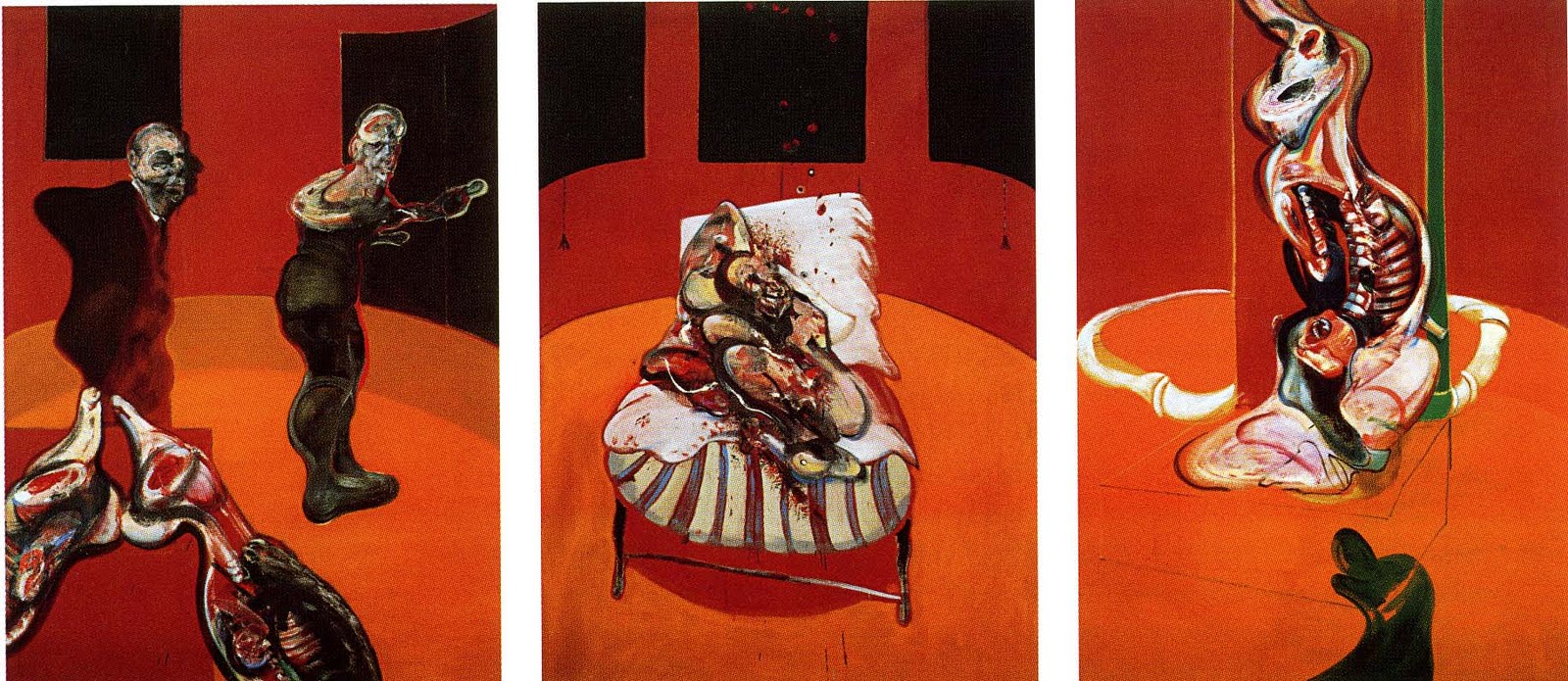
Francis Bacon, Study for a Crucifixion


Le Corbusier, Notre Dame du Haut, Ronchamp, France


Le Corbusier, Oscar Niemeyer, Wallace Harrison, and others, The United Nations Headquarters, New York


Ludwig Mies Van Der Rohe, The Seagram Building, New York


ART & WORLD WAR II

Degenerate Art Exhibition
Albert Speer
existentialism
Le Corbusier
--The United Nations
Mies Van Der Rohe
--curtain wall


The Opening of the Great German Art Exhibit on film.
This is a soundless amateur color film of the pageantry that accompanied the opening of Hitler's official show of approved German art in 1937.


Friday, November 26, 2010

Expressionist Architecture, The Bauhaus, and International Modernism


Bruno Taut, Glass Pavillion, Cologne, destroyed, Expressionist Architecture


Erich Mendelsohn, Einstein Tower, Potsdam, Expressionist Architecture


Walter Gropius, The Fagus Shoe Factory


Lionel Feininger, Cathedral, woodcut from the Bauhaus Manifesto


The Bauhaus Basic Course, Josef Albers with students, 1928


Lazlo Moholy-Nagy, Photogram, Bauhaus


Herbert Bayer, design for a news kiosk, Bauhaus


Marcel Breuer, Wassily Chair, Bauhaus


Marianne Brandt, tea set, Bauhaus


Wilhelm Wagenfeld, Electric Table Lamp, Bauhaus


Gunta Stözl, Wall Hanging, Bauhaus


Faculty Apartment for Lazlo Moholy-Nagy, Bauhaus campus, Dessau, photographed in 1927


Walter Gropius and the Bauhaus faculty, Bauhaus Campus, Dessau, Bauhaus


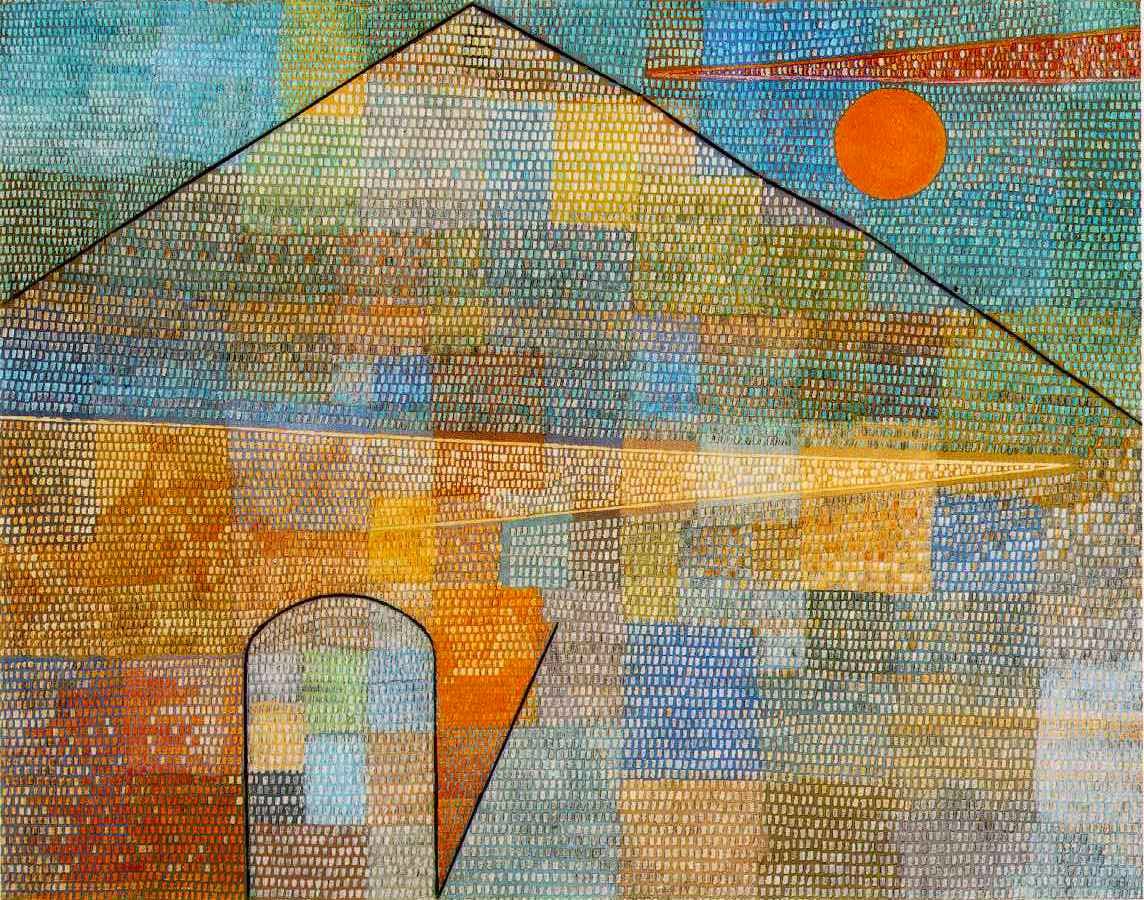
Paul Klee, Ad Parnassum, Bauhaus


Ludwig Mies Van Der Rohe, proposed glass office building for the Friedrichstrasse, Berlin, International Modernism.


Ludwig Mies Van der Rohe, German Pavillion at the 1929 Barcelona Exhibition


Le Corbusier, Villa Savoye, International Modernism


Le Corbusier, Unite d'Habitation, Marseilles, International Modernism


Frank Lloyd Wright, Fallingwater, Bear Run, PA


ARCHITECTURE AND DESIGN BETWEEN THE WARS

Expressionist Architecture
--glass
--Bruno Taut
--Erich Mendelsohn
The Bauhaus
--Walter Gropius
--Johannes Itten
--Lazlo Moholy-Nagy
--Bauhaus Basic Course
International Modernism
--Ludwig Mies Van Der Rohe
--Le Corbusier
-----The Radiant City
Frank Lloyd Wright


The Original Futurama


Before it became the namesake of a show on Comedy Central, the Futurama was an enormous series of dioramas in the General Motors pavilion at the 1939 - 1940 World's Fair in New York City (Corona Park in Queens).  Designed by Norman Bel Geddes, this huge diorama series was built to be a glimpse 20 years into the future as imagined by General Motors.  This was the most popular exhibit at the fair.  Visitors stood in line for hours to ride the moving chairs with the speakers telling them all about the wonders of things to come in 1960.

The General Motors Pavilion at the 1939-1940 New York World's Fair; note the long lines waiting to get in.


People riding the mobile chairs looking at the dioramas designed by Norman Bel Geddes


Part of Norman Bel Geddes' diorama showing a huge highway intersection flanked by 4 quarter of a mile high skyscrapers in the future, in 1960.


Here is a film about the Futurama produced by General Motors in 1940, To New Horizons. It starts out in black and white, but the Futurama itself is all filmed in Technicolor.


The USA was still going through the Great Depression during the 1939 - 1940 Fair. This vision of a brighter, more spacious, and more hopeful future filled with opportunity thrilled audiences living in the bleak and cramped world of the 1930s. This is the future as imagined by a major car manufacturer with lots of emphasis on roads and transportation. After World War II, the United States and almost all of its major cities would be completely rebuilt to accommodate the automobile. Some of Bel Geddes' design is still praised for being so far-sighted, especially in his extensive use of continuous park space in cities and along river fronts. Other aspects might have been just a little too sweeping. There's no room in any of it for historical preservation or for mass transit.